In the field of modern kitchenware manufacturing and quality control, the surface durability of cookware directly affects user experience and product service life. Among various evaluation indicators, scratch resistance performance is one of the key factors for assessing the quality of non-stick pans, metal cookware, and various cooking utensils.The Cookware Scratch Resistance Tester is a professional testing instrument designed to simulate friction and scratching conditions that occur during actual use. It provides manufacturers with scientific and accurate test data to ensure that products meet quality standards.This article will introduce this equipment from multiple aspects, hoping to provide useful reference information.
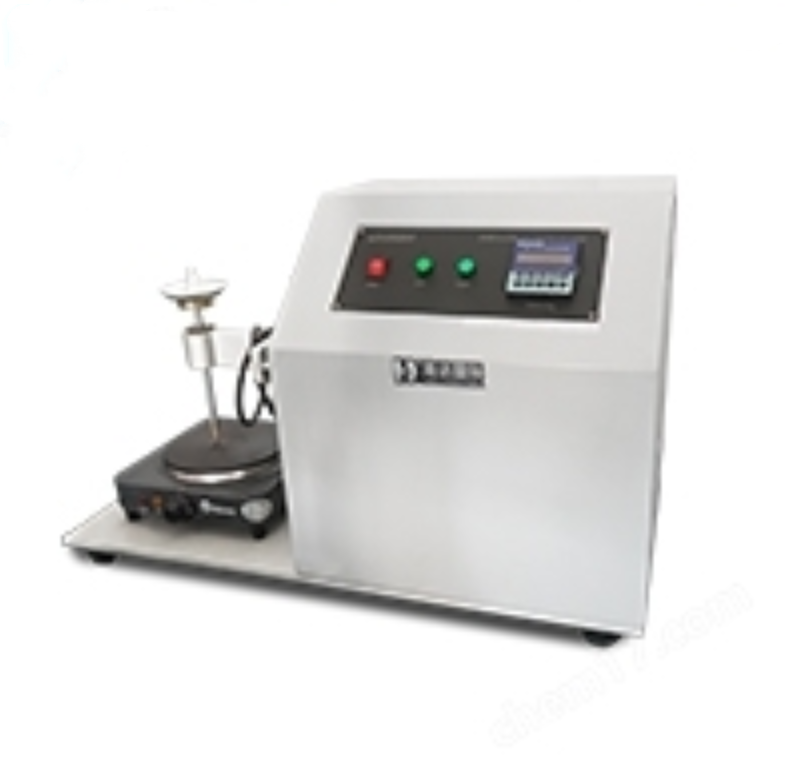
The working principle of the Cookware Scratch Resistance Tester is designed to accurately simulate the real-life usage conditions of non-stick cookware. It mainly reproduces the damage that occurs when the surface of cookware is scratched by hard objects under high-temperature cooking conditions, thereby evaluating the wear resistance and scratch resistance of cookware coatings.
During daily cooking, cookware is often exposed to high temperatures. Under these conditions, the hardness and stability of the coating may change, making it more vulnerable to scratching and abrasion compared with normal-temperature environments. This is one of the main reasons why the coatings of non-stick cookware may peel off after long-term use.
The equipment accurately recreates this actual operating environment. First, the non-stick cookware is heated by a dedicated electric heating plate to simulate the high-temperature conditions of daily cooking, allowing the cookware to maintain a realistic operating temperature during testing and ensuring that test results are closer to actual usage conditions.
The tester is equipped with a standard 1 mm round-tip scratching needle. During testing, a stable standard pressure of approximately 5 N is applied to the scratching needle to simulate the actual force generated when kitchen utensils rub against the cookware surface. At the same time, the scratching speed can be precisely controlled. The scratching needle moves across the cookware surface at a constant speed of 0.08 m/s, completing a fixed-distance scratch test, with each scratching stroke being no less than 80 mm.
Throughout the entire testing process, the equipment maintains standardized operation with constant speed and constant force, avoiding problems such as pressure fluctuation and uneven movement. This allows the scratching action during manual cooking to be reproduced as realistically as possible.
By observing the coating damage and scratch marks on the cookware surface after high-temperature scratching, the scratch resistance performance of the non-stick coating can be objectively and accurately evaluated. This provides a reliable basis for determining product quality and verifying whether cookware meets relevant quality requirements.
1. Prepare the Testing Equipment and Sample
Before testing, check the operating condition of the Cookware Scratch Resistance Tester and the dedicated electric heating plate. Ensure that the equipment is free from faults and operates smoothly.
At the same time, clean the surface of the non-stick cookware sample to ensure that the cookware surface is free from dust, oil stains, and other impurities, preventing external factors from affecting the accuracy of test results.
2. Fix and Heat the Test Sample
Place the non-stick cookware sample steadily on the electric heating plate with matching specifications. The heating plate has a diameter of 180 ± 20 mm and a power rating of 1500 W, which can meet the testing requirements of conventional cookware.
Use the electric heating plate to continuously heat the cookware and maintain the cookware temperature within the standard testing range of 220 ± 5°C.
3. Accurately Monitor the Testing Temperature
The temperature measurement point is located at the center of the bottom surface of the cookware. It is recommended to use an infrared non-contact temperature detector for real-time temperature monitoring to ensure that the temperature accurately reaches the required standard.
The scratch test can begin after the cookware temperature has stabilized within the specified range.
4. Perform Standardized Scratch Testing
After confirming that the temperature meets the requirements, start the tester. The equipment uses a 1 mm diameter round-tip scratching needle to perform the scratch test.
Under a constant pressure of 5 N ± 0.1 N, the scratching needle moves across the cookware surface at a standard speed of 0.08 m/s ± 0.01 m/s, completing one standardized scratch test over a stroke length of no less than 80 mm.
5. Observe and Record Test Results
After completing the test, turn off the equipment and heating power supply. Carefully observe the scratches and damage conditions on the surface coating of the non-stick cookware.
Record the test data and changes in the sample appearance in detail. Based on the evaluation results, determine whether the scratch resistance performance of the cookware meets the required quality standards.
Currently, cookware scratch resistance testing is mainly based on international testing standards. Different standards correspond to different testing methods, which are used to evaluate the scratch resistance, wear resistance, and durability of cookware coatings.
1. Pneumatic Ballpoint Pen Method
This method is mainly used to evaluate the scratch resistance of non-stick coatings. A pneumatic device drives a 1 mm diameter carbide steel ball-point pen tip to perform scratch testing on the coating surface under an adjustable air pressure of 6–12 Psi and a fixed stroke distance.
This method features simple operation and is suitable for rapid evaluation of the coating's resistance to penetration and surface damage.
2. Reciprocating Scratch Test Method
This method simulates the repeated stirring and scraping actions of a spatula during cooking. By setting a fixed load and scratching speed, the tester performs thousands or even tens of thousands of reciprocating scratch cycles until visible scratches, coating peeling, or coating wear-through occurs.
During the test, the dynamic changes in the friction coefficient are monitored simultaneously to evaluate the self-lubricating performance and wear life of the coating.
3. Progressive Load Scratch Test Method
This method is commonly used for evaluating the hardness of polished metal surfaces or hard coatings. A gradually increasing vertical load is applied to the test surface, and the critical load required to produce clearly visible scratches is measured.
The test results reflect the penetration resistance of the material surface layer and the bonding strength between the coating and the substrate, providing important data for evaluating coating durability and surface performance.
The core function of the Cookware Scratch Resistance Tester is to simulate scratching scenarios that occur during actual use and scientifically evaluate the scratch resistance, adhesion strength, and durability of cookware surfaces, especially coatings. It helps verify product quality compliance and service life.
1. Simulating Real-life Damage Conditions
The tester reproduces repeated scratching actions caused by metal spatulas, food particles, or cleaning tools on cookware surfaces, accurately simulating the mechanical wear process that occurs during daily use.
2. Quantifying Mechanical Properties of Coatings
The tester determines the critical conditions under which coatings resist plastic deformation, develop visible scratches, or experience peeling. It provides an objective evaluation of coating hardness, scratch resistance, and bonding strength between the coating and substrate.
3. Ensuring Safety and Functional Performance
The tester helps ensure that coatings do not easily detach after damage and contaminate food. At the same time, it verifies whether cookware can maintain its non-stick performance and appearance integrity, ensuring compliance with food-contact material safety requirements.
4. Supporting Product Development and Quality Control
The tester provides objective and repeatable test data for coating formulation optimization, manufacturing process improvement, and final product quality evaluation, helping eliminate unreliable claims regarding scratch resistance performance.
In conclusion, the Cookware Scratch Resistance Tester is a key testing instrument for evaluating the surface durability of cookware. It demonstrates irreplaceable value in product quality control, process research and development, and consumer safety protection.With its precise and scientific testing capabilities, the instrument provides reliable support for manufacturers seeking to improve product performance and ensure quality compliance. We sincerely welcome you to contact us regarding equipment applications, technical parameters, testing standards, or purchasing requirements. Based on your specific needs, we will provide detailed product information, operation manuals, and professional solutions.