In modern industrial applications, many critical components, such as offshore engineering equipment, petrochemical pipelines, automotive engine components, and medical devices, are simultaneously exposed to mechanical friction and chemical corrosion. This combined wear-corrosion synergistic effect can cause material failure at a rate far greater than that resulting from simple wear and corrosion acting independently.To accurately evaluate the service performance of materials under such demanding conditions, the Electrochemical Corrosion Wear Tester has been developed as a key testing instrument for materials research and engineering quality control.
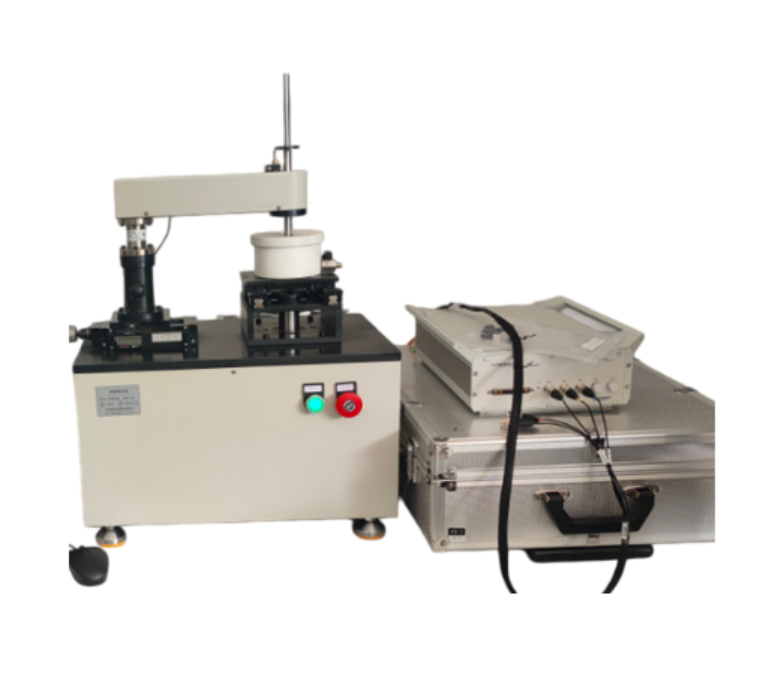
1. Main Technical Features
Depending on the application, Electrochemical Corrosion Wear Testers are mainly divided into contact sliding wear and fluid erosion wear types, with the following key technical features:
Multi-Sensor Integration and High-Precision Measurement
High-end models typically integrate load sensors, acoustic emission sensors, and resistance sensors, with load ranges covering 0.2–2000 N and wear-depth measurement accuracy reaching 0.025 μm.
The acoustic emission sensor can capture transient signals associated with surface microcrack propagation and material spalling, while the resistance sensor monitors changes in contact resistance to provide real-time information on film thickness variation and critical load, enabling dynamic early warning of material failure.
2. Versatile Motion Modes
To simulate different real-world operating conditions, the equipment supports multiple motion modes:
Linear Reciprocating Mode:
Suitable for research on sliding components such as piston rings and guide rails, with a stroke of up to 120 mm and an adjustable frequency.
Rotational Mode:
Includes pin-on-disk and ring-on-block configurations, suitable for rotating contact components such as bearings and gears, with speeds of up to 5000 rpm.
Jet Erosion Mode:
Designed for fluid machinery components such as pump impellers and pipeline elbows. A plunger metering pump sprays sand-containing water onto the specimen surface at a specified angle and pressure to simulate erosion-corrosion conditions in solid-liquid two-phase flow.
3. Wide Temperature Range and Environmental Adaptability
Some high-performance models support high-temperature testing, with temperature ranges extending from room temperature up to 1000°C, and can perform in-situ testing in combination with corrosive liquid media.
The main body and piping are typically manufactured from 304 or 316L stainless steel, providing stable long-term operation in highly corrosive environments.
In the field of materials science, the tester is mainly used to study the corrosion-wear behavior of metals, ceramics, polymers, and composite materials, providing experimental support for the development of new materials. For example, it can be used to investigate the corrosion-wear performance of offshore engineering steel in seawater environments and optimize material composition.
In mechanical manufacturing, it is used to evaluate the performance of mechanical components and determine their service life in environments containing lubricating oils, acidic or alkaline media, and other corrosive conditions, providing a basis for component design and material selection.
In the aerospace industry, the equipment can simulate complex conditions such as high-altitude environments, high temperatures, and corrosive media to evaluate the corrosion-wear performance of components such as aircraft engine blades and landing gear, helping ensure the safe and reliable operation of aerospace equipment.
In the biomedical field, it is used to test medical materials such as artificial joints and dental implants. By simulating the human body-fluid environment, the equipment evaluates the biocompatibility and corrosion-wear performance of materials to ensure their safety for medical applications.
In addition, the equipment is widely used in petrochemical, mining, water conservancy, and power industries for corrosion-wear testing of components such as pipelines, valves, and pump bodies, providing technical support for equipment optimization, upgrading, and safe operation. It can also be used by universities and research institutes for teaching and research, supporting academic studies in corrosion and wear.
The core value of the Electrochemical Corrosion Wear Tester lies in its ability to simultaneously acquire and analyze multiphysics data. During testing, the equipment can record conventional mechanical parameters such as friction force, coefficient of friction, wear depth, and torque, while its integrated three-electrode system can simultaneously monitor electrochemical parameters including open-circuit potential, corrosion current density, and polarization curves in real time.
Quantification of Synergistic Effects
By comparing data obtained under pure corrosion, pure wear, and corrosion-wear conditions, researchers can quantify the extent to which mechanical action accelerates the corrosion rate and determine how corrosion-product films affect the coefficient of friction. This provides deeper insight into the synergistic damage mechanism in which the combined effect of corrosion and wear is greater than either process acting independently.
Dynamic Failure Analysis
With accessories such as acoustic emission sensors and resistance sensors, the equipment can capture the generation and propagation of surface microcracks, as well as the breakdown and regeneration of corrosion films, in real time.
For example, when a passive film on the material surface is broken by friction, the newly exposed metal undergoes rapid anodic dissolution. This process can be accurately detected through transient changes in electrical current.
Correlation with Microscopic Surface Morphology
Combined with a high-precision displacement sensor, the equipment can accurately measure wear volume and correlate the results with subsequent surface morphology analysis, establishing a relationship between macroscopic material loss and microscopic corrosion products.
Overall, the Electrochemical Corrosion Wear Tester serves as an important bridge between laboratory research and engineering applications, playing a significant role in material selection, process optimization, and service-life prediction.With advances in sensor technology and control algorithms, future testing systems are expected to become increasingly intelligent and capable of more realistically reproducing complex and variable operating conditions, providing a solid scientific basis for improving the reliability and safety of critical equipment.