In harsh operating environments such as mining machinery, construction engineering, and agricultural equipment, material surfaces are often subjected to dual challenges of dry sand erosion and wet slurry abrasion. The wear resistance of materials directly determines the service life, safety, and reliability of equipment.The Dry and Wet Sand Abrasion Tester is a core testing instrument in the field of material wear performance evaluation. It can simulate abrasive wear processes under both dry sand and wet sand conditions, accurately quantify the wear resistance of materials, and provide scientific data support for material development, production quality control, and process optimization. The equipment is widely used in various industrial and research fields.
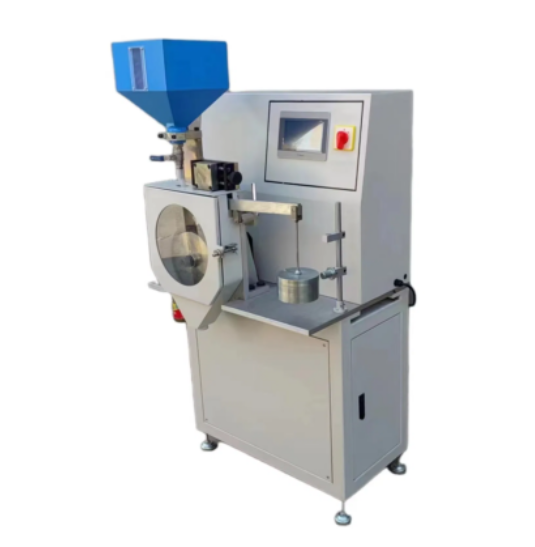
The core principle of the Dry and Wet Sand Abrasion Tester is to simulate the relative movement between abrasive particles and test specimens. Through the cutting and plowing actions of abrasives, the surface of the specimen is worn, and the wear resistance of the material is evaluated by accurately measuring the amount of material loss.
The working principle varies slightly between dry sand abrasion and wet sand abrasion conditions, and the test relies on the coordinated operation of a complete mechanical and measurement system.
Dry Sand Abrasion Test Principle
During dry sand testing, abrasive materials such as quartz sand freely fall through a metal sand nozzle under the action of gravity. A rubber wheel rotating clockwise carries the abrasive particles into contact with the specimen surface fixed on the fixture.
The relative sliding friction between the abrasive particles and the specimen surface causes cutting and plowing effects, resulting in microscopic plastic deformation and material removal. After the test, the wear resistance of the material is determined by accurately measuring the mass loss or volume loss of the specimen before and after abrasion.
Wet Sand Abrasion Test Principle
During wet sand testing, the rubber wheel rotates counterclockwise and the stirring impellers on both sides agitate the abrasive slurry. The slurry with a specified concentration is introduced into the contact area between the specimen and the rubber wheel.
The abrasive particles in the liquid medium generate wear on the specimen surface. The basic wear mechanism is similar to that of the dry sand test; however, the liquid medium changes the movement behavior of abrasive particles and influences the wear intensity, making the test condition closer to actual wear environments involving moisture or slurry exposure.
Through the simulation of both dry and wet abrasive conditions, the Dry and Wet Sand Abrasion Tester provides comprehensive and reliable evaluation of material wear resistance under different service environments.
The core function of the Dry and Wet Sand Abrasion Tester is to simulate abrasive wear phenomena experienced by various materials under natural or industrial environments, quantitatively evaluate material wear resistance, and provide reliable data support for material selection, process improvement, and product service life prediction.Specifically, its functions are mainly reflected in the following three aspects:
1. Precise Wear Performance Testing
By controlling key parameters such as applied load, rotation speed, and abrasive type, the tester can simulate wear processes under different operating conditions. It quantitatively measures important indicators such as mass loss and volume loss of materials, providing a direct evaluation of material wear resistance and wear grade.
2. Material Comparison and Selection
The equipment enables comparative testing of specimens made from different materials or treated with different surface processing technologies. Through test result analysis, engineers can quickly identify wear-resistant materials that meet specific application requirements, supporting optimized material selection for industrial applications.
3. Scientific Research Support
The tester provides important technical support for researchers studying abrasive wear mechanisms. By analyzing wear behavior under different conditions, researchers can optimize material formulations and surface treatment technologies, accelerating the development and application of advanced wear-resistant materials.Through accurate simulation and quantitative evaluation, the Dry and Wet Sand Abrasion Tester serves as an essential tool for improving material durability and enhancing the reliability of industrial equipment.
Industrial Applications
The Dry and Wet Sand Abrasion Tester is widely used in industries such as mining machinery, construction equipment, excavation machinery, transportation machinery, and agricultural machinery. It is mainly used to evaluate the wear resistance of materials used in mechanical components, including gears, bearings, liners, and buckets.
By testing the abrasion resistance of different materials, manufacturers can select suitable wear-resistant materials, optimize production processes, extend the service life of components, and reduce equipment maintenance costs.
The tester is also widely applied in material manufacturing enterprises for quality control, performing wear resistance evaluations on finished materials such as metals, ceramics, coatings, and plastics to ensure that products meet relevant industry standards.
Research and Scientific Applications
In universities and research institutions, the tester is used for studying abrasive wear mechanisms and investigating wear behavior under different materials and operating conditions.
Researchers can use test data to optimize material formulations and surface treatment technologies, promoting the development of advanced wear-resistant materials such as wear-resistant coatings and composite wear-resistant materials.
The equipment can also be used to verify the wear performance of newly developed materials, providing scientific data support for material selection and practical applications.
Other Applications
The Dry and Wet Sand Abrasion Tester is also used in industries such as refractory ceramics and sand-lime brick molds to evaluate material wear resistance and optimize product designs.With continuous technological development, its application range is gradually expanding into emerging fields such as new energy and aerospace, providing essential wear testing support for high-performance materials used in advanced equipment.
1. Daily Cleaning
After each test, wait until the equipment has cooled down, then use a soft brush or vacuum cleaner to remove wear debris and residual slurry. Special attention should be paid to cleaning key areas such as the specimen fixture, rubber wheel, sand nozzle, and slurry tank to prevent abrasive particles from entering moving parts and causing secondary wear.
During cleaning, avoid using hard tools to scrape the equipment surface to prevent damage to fixtures and sensor components. After cleaning, apply a thin layer of anti-rust oil to exposed metal parts to prevent corrosion.
2. Regular Inspection
Weekly inspection: Check the fastening components of the equipment and tighten any loose parts in time.
Monthly inspection: Check moving components such as guide rails and lead screws, and apply lithium-based grease to ensure smooth operation.
Every 6–12 months: Calibrate the force sensor, displacement sensor, and balance. If measurement deviation exceeds the allowable range, send the equipment to a qualified metrology department for calibration.
Regularly check the wear condition of the rubber wheel. If the outer diameter decreases below the specified limit or the hardness no longer meets requirements, replace the rubber wheel promptly.
3. Lubrication and Test Medium Maintenance
Regularly check the lubrication condition of the drive motor and bearings, and replenish grease when necessary.
For wet sand abrasion tests, regularly clean the slurry tank and stirring impellers, and replace the slurry with fresh abrasive medium to prevent changes in medium properties from affecting test accuracy.
Clean the oil circuit and filters every quarter to ensure smooth flow and reliable operation of the system.
As an important testing instrument for evaluating material surface performance, the Dry and Wet Sand Abrasion Tester deserves significant attention. It can simulate actual abrasive wear conditions under both dry and wet environments, providing essential experimental data for evaluating material wear resistance and studying wear mechanisms.With convenient operation, comprehensive functions, and accurate and reliable test results, the equipment serves as an effective tool for research institutions, universities, and industrial enterprises in material development and quality control.For technical specifications, application details, or purchasing information, professional technical consultation and comprehensive after-sales support are available to help users select and apply the equipment effectively.