The Total Knee Prosthesis Wear Tester is a highly specialized biomechanical testing device designed to simulate the complex motion and loading conditions experienced by human knee joints during long-term service. By accurately reproducing multi-axis motion and dynamic loading under physiological gait conditions, the equipment evaluates the wear resistance, tribological properties, and structural stability of prosthetic materials. It provides essential data support for medical device R&D and optimization, quality control, and clinical safety assessment.
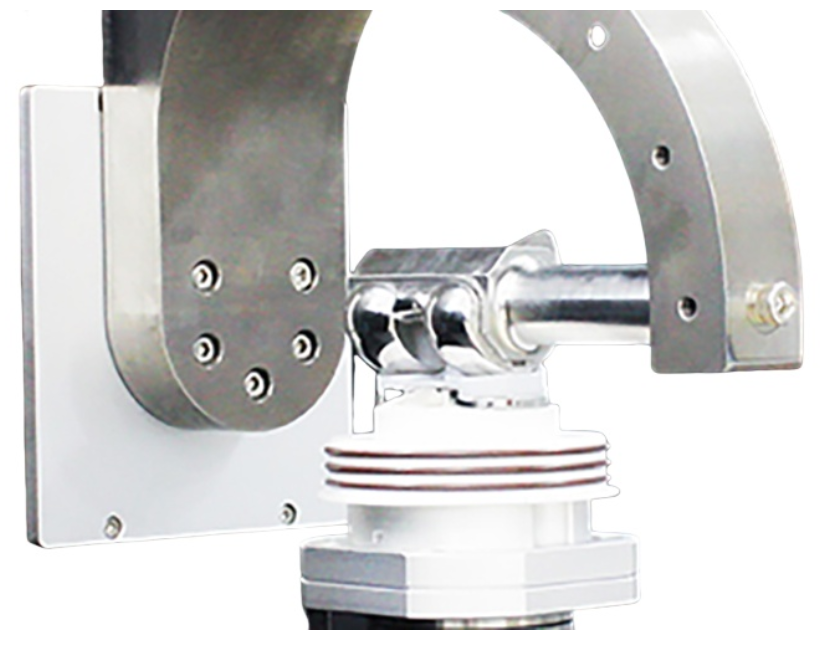
The Total Knee Prosthesis Wear Tester is not simply a friction testing machine. Its core function lies in accurately reproducing the complex kinematic and kinetic environment of the human knee joint. According to the ISO 14243 series of international standards, testing is primarily divided into force-controlled (ISO 14243-1) and displacement-controlled (ISO 14243-3) modes.
The displacement-controlled mode is more representative of physiological conditions. It uses precise displacements driven by the central nervous system through skeletal motion as inputs and measures mechanical responses such as joint contact forces. Through a multi-axis servo system, the tester synchronously drives the prosthesis to perform multi-degree-of-freedom movements, including flexion and extension, anterior-posterior translation, medial-lateral translation, and rotation. This multi-axis coupling mechanism simulates high-load rolling-sliding motion during the stance phase of the gait cycle and low-load, high-angle swinging motion during the swing phase, thereby accurately reflecting the loading conditions and wear mechanisms experienced by the prosthesis in vivo.
A high-performance Total Knee Prosthesis Wear Tester typically consists of the following core modules:
1. Multi-Degree-of-Freedom Motion and Loading System
The equipment must provide motion control in at least three directions, including flexion/extension, anterior/posterior translation, and internal/external rotation, while also applying axial loads. High-precision sensors monitor displacement and force values in each degree of freedom in real time, ensuring that amplitude errors of force and displacement remain within extremely small limits throughout a motion cycle and that phase errors are strictly controlled to guarantee the physiological accuracy of the motion trajectory.
2. Biomimetic Environmental Simulation System
Temperature Control Unit: Maintains the temperature of the lubricating medium at a constant 37 ± 2°C. This not only simulates the temperature inside the human body but also ensures that the mechanical properties of materials such as ultra-high-molecular-weight polyethylene (UHMWPE) remain representative of in-service conditions while maintaining stable lubricant viscosity.
Lubricant Circulation System: Diluted bovine serum is used as the lubricant to simulate the protein composition and boundary lubrication characteristics of human synovial fluid. The system is equipped with continuous filtration and circulation mechanisms to promptly remove wear particles and prevent abnormal accelerated wear caused by third-body abrasion. An antibacterial agent is also added to inhibit biological degradation, ensuring that test results can be attributed primarily to mechanical wear.
3. Intelligent Measurement, Control, and Data Acquisition System
The integrated measurement and control software allows users to preset standard gait profiles or customize motion curves. The system displays force-displacement curves for each station in real time and automatically adjusts motion trajectories to match target curves without manual intervention. In addition, the equipment features leakage monitoring to ensure the integrity and safety of the testing process.
As a core instrument for evaluating the durability of implantable devices, the Total Knee Prosthesis Wear Tester provides value not only during product development but also in enhancing clinical safety and reducing healthcare costs.
1. Simulating Physiological Conditions to Accurately Predict Service Life
Human knee joint motion is not a simple hinge-like opening and closing movement. Instead, it involves complex coupled motions with multiple degrees of freedom, including flexion and extension, rotation, anterior-posterior translation, and varus-valgus movement. The core value of the Total Knee Prosthesis Wear Tester lies in its ability to reproduce these physiological processes with high fidelity.According to international standards such as ISO 14243. modern wear testers employ displacement-controlled or force-controlled modes to accurately simulate load profiles and motion trajectories under different gait conditions, including walking, stair climbing, and even squatting. By maintaining a constant temperature of 37 ± 2°C and using protein-containing bovine serum as the lubricating medium, the tester establishes a biomechanical and biochemical environment closely resembling that in the human body.This high-fidelity simulation capability enables researchers to complete wear-cycle testing equivalent to several years of human use within several weeks or months, thereby identifying delamination, cracking, or fretting wear at metal interfaces in polyethylene inserts at an early stage. This provides reliable data for predicting the actual in vivo service life of prostheses.
2. Optimizing Materials and Designs to Drive Technological Advancement
During prosthesis development, the wear tester is an essential tool for validating new materials and designs. The wear resistance of ultra-high-molecular-weight polyethylene (UHMWPE), its modified materials, metal materials with ceramic coatings, and other novel biomaterials must be quantitatively evaluated through standardized wear testing.The tester can capture subtle wear mechanisms resulting from the combined effects of multi-axis loading, such as subsurface fatigue caused by the combination of axial pressure and shear stress, as well as the effects of lubricant pumping mechanisms on wear particle migration induced by dynamic load variations.By analyzing the morphology of wear debris generated during testing, mass loss, and changes in articular surface morphology, engineers can systematically optimize prosthesis geometry, such as post-cam mechanisms, improve surface roughness, or adjust material crosslinking levels.This data-driven iterative design process significantly enhances the wear resistance of prostheses and reduces the risk of osteolysis and prosthesis loosening caused by wear particles.
3. Ensuring Clinical Safety and Reducing Healthcare Burdens
From the perspectives of regulatory compliance and market access, the Total Knee Prosthesis Wear Tester serves as an essential safeguard for ensuring the safety and effectiveness of medical devices. Regulatory authorities in various countries require implantable medical devices to provide comprehensive in vitro wear testing reports before market approval.Strict testing standards help screen out products with design defects or inadequate material performance, reducing revision surgeries caused by premature prosthesis failure at the source.For patients, this means longer prosthesis service life and fewer complications. For healthcare systems, it means significantly reducing the substantial medical expenses and resource consumption associated with revision surgeries.Furthermore, the standardized data provided by the tester offers scientific support for clinicians when selecting prosthesis models suitable for patients with different activity levels, contributing to personalized and precision medicine.
In conclusion, the Total Knee Prosthesis Wear Tester is not only a bridge between laboratory research and clinical practice but also an important technological foundation for ensuring the long-term safety of artificial joint implants and improving patients' quality of life. With the continuous refinement of testing standards and advances in control technologies, its role in precision medicine and high-end medical device manufacturing will become increasingly significant.
Prev:How do you operate a paint film scratch tester?
Next:No more