The Sliding Bearing Fatigue Testing Machine is a core testing device used to evaluate the fatigue performance of sliding bearings. With the continuous advancement of industrial technology, sliding bearings are being applied in increasingly complex operating environments, leading to higher requirements for their fatigue resistance and service performance.Therefore, sliding bearing fatigue testing machines need to be continuously upgraded and optimized to achieve breakthroughs in testing accuracy, operating condition simulation capabilities, intelligent control systems, and overall testing performance, ensuring more reliable and comprehensive evaluation of sliding bearing fatigue properties.
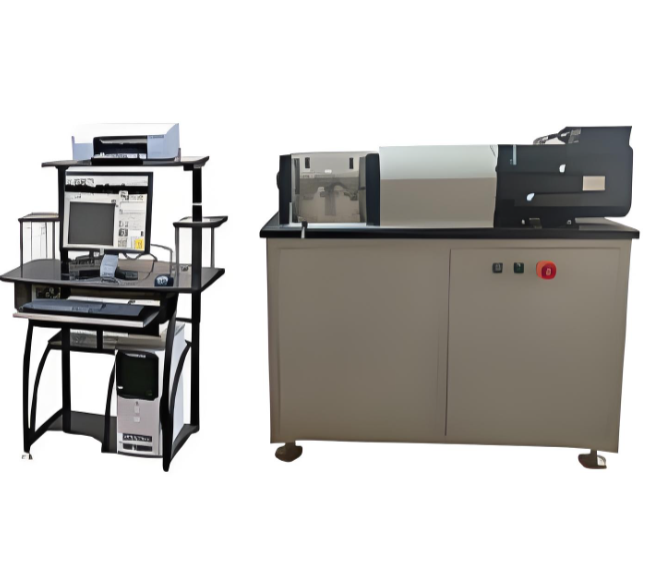
The core principle of the Sliding Bearing Fatigue Testing Machine is to simulate the actual loading conditions, motion characteristics, and operating environments experienced by bearings during service. By applying periodic cyclic loads to accelerate fatigue damage, the machine evaluates key performance parameters such as the fatigue limit and fatigue life of sliding bearings. Essentially, it combines accelerated aging testing with precise performance evaluation.
The equipment mainly consists of a main test frame, drive system, loading mechanism, fixtures, sensors, and computer control system. These systems work together to complete the fatigue testing process.
The drive system rotates the main shaft to simulate the relative motion between the bearing and journal. The rotational speed supports stepless adjustment to meet different testing requirements. The loading mechanism applies radial or axial loads through closed-loop control, ensuring accurate and stable load application.
During the testing process, sensors continuously collect real-time data such as test force, friction torque, temperature, and other performance parameters. The computer control system processes and analyzes the collected data, generates test curves, monitors abnormal conditions, and automatically activates shutdown protection when necessary.
Under continuous cyclic loading, microscopic defects inside the bearing material gradually expand until fatigue failure or fracture occurs. The testing machine records relevant data throughout the process, providing a reliable basis for evaluating bearing fatigue performance and service life.
For oil lubrication fatigue tests, the lubrication conditions must be strictly controlled, including parameters such as lubricant type, supply method, and lubrication amount, to ensure the accuracy and reliability of test results.
1. Operating Condition Simulation Function
The machine can accurately simulate various operating conditions experienced by sliding bearings during actual service. It covers different loading conditions (constant load and alternating load), motion modes (unidirectional rotational friction and reciprocating rotary friction at a specified angle), lubrication conditions (oil lubrication and water lubrication), as well as various environmental conditions. This enables comprehensive evaluation of sliding bearing performance under different working scenarios.
2. Fatigue Performance Testing Function
Fatigue performance testing is the core function of the equipment. It can accurately evaluate key performance parameters of sliding bearings, including fatigue limit, fatigue life, friction torque, and friction coefficient. The test results provide important data for analyzing bearing durability, reliability, and service performance.
3. Data Acquisition Function
The equipment is equipped with an industrial-grade data acquisition system capable of collecting up to 1.000 sets of data per second. It can monitor and record multiple parameters in real time, including test force, friction torque, friction coefficient, temperature, rotational speed, and number of cycles. The high-precision acquisition system minimizes human interference and ensures reliable and accurate test results.
4. Safety Protection Function
The machine is equipped with a comprehensive safety protection system to ensure safe operation during testing and protect both the operator and the equipment. The safety mechanisms help prevent equipment damage caused by abnormal operating conditions.
5. Flexible Adaptability Function
The equipment adopts a modular design, allowing flexible adjustment and customization of testing parameters. It can be adapted for different specifications and types of sliding bearings, such as bimetallic bearings and multilayer bearings, by adjusting fixtures and test conditions. This ensures that the machine can meet diverse testing requirements in research, development, production quality control, and performance evaluation.
1. Operating Condition Simulation Function
The equipment can accurately simulate various operating conditions of sliding bearings during actual operation, including different load conditions (constant load and alternating load), motion modes (unidirectional rotary friction and reciprocating rotary friction at a specified angle), lubrication conditions (oil lubrication and water lubrication), as well as different environmental conditions.
2. Fatigue Performance Testing Function
This is the core function of the equipment. It can accurately evaluate key performance parameters of sliding bearings, including fatigue limit, fatigue life, friction torque, and friction coefficient. The test results provide essential data for analyzing the durability, reliability, and service performance of sliding bearings.
3. Data Acquisition Function
The machine is equipped with an industrial-grade data acquisition system capable of collecting up to 1.000 sets of data per second. It can monitor and record multiple parameters in real time, including test force, friction torque, friction coefficient, temperature, rotational speed, and number of cycles. The high-precision acquisition system ensures accurate data collection while eliminating interference caused by manual operation.
4. Safety Protection Function
The equipment is equipped with a comprehensive safety protection system to ensure safe operation throughout the testing process and prevent damage to the machine caused by abnormal conditions.
5. Flexible Adaptability Function
The equipment adopts a modular design, allowing flexible adjustment and customization of testing parameters. It can be adapted to different specifications and types of sliding bearings, such as bimetallic bearings and multilayer bearings, by adjusting fixtures and test parameters. This enables the machine to meet diverse testing requirements in research, development, quality control, and performance evaluation applications.
1. Research and Development Applications
The machine is used for the design optimization and performance improvement of new sliding bearings. By testing the fatigue performance of bearings with different structures and materials, engineers can optimize bearing design parameters and material formulations, thereby improving service life, reliability, and operational stability.
2. Quality Inspection Applications
The equipment is used for final inspection and sampling inspection during the production process of sliding bearings. It helps identify defective products and ensures that bearing quality complies with industry standards, technical specifications, and customer requirements.
3. Academic and Scientific Research Applications
The machine provides experimental support for universities and research institutions conducting studies on sliding bearing fatigue mechanisms, lubrication behavior, material properties, and failure mechanisms. It helps promote the transformation of scientific research achievements into practical engineering applications.
4. Quality Arbitration Applications
Through scientific and accurate testing data, the equipment provides objective and reliable evidence for resolving quality disputes related to sliding bearing products, supporting fair evaluation and technical arbitration.
Operators must complete professional training and pass the required assessment before operating the equipment. During operation, appropriate personal protective equipment must be worn. Unauthorized operation and improper handling are strictly prohibited. Operators should not leave the equipment unattended during testing or enter hazardous areas, and touching moving components while the machine is running is strictly forbidden.
Before starting a test, the equipment must be thoroughly inspected to ensure that all components are functioning normally. Test parameters must be set strictly according to the test plan, and unauthorized modification of parameters is not allowed. If abnormal conditions such as unusual noises, abnormal parameters, or equipment malfunctions occur, the machine must be stopped immediately for inspection. Operating the equipment under faulty conditions is strictly prohibited.
Test specimens must meet the specified requirements. During installation, specimens must be properly aligned and firmly clamped to ensure reliable testing. Specimen replacement must only be performed after the machine has been stopped and the load has been completely released. Lubricating oils and other consumables must comply with relevant standards, be replaced regularly, and any specimen debris or oil contamination should be cleaned promptly.
The equipment should be regularly lubricated, calibrated, and maintained according to the operation manual. Both insufficient maintenance and excessive maintenance should be avoided. When the equipment is not used for an extended period, proper dust-proof and moisture-proof measures should be taken. In case of equipment failure, professional technicians should be contacted for repair, and unauthorized disassembly is strictly prohibited.
During testing, detailed test records should be maintained. The temperature and humidity of the test environment should be controlled within the required range, and relevant national standards should be followed to ensure that test results are accurate, reliable, and comparable.
As a core testing device for evaluating the fatigue performance of sliding bearings, the Sliding Bearing Fatigue Testing Machine plays an irreplaceable role in bearing research and development, production quality control, performance inspection, and academic research. With its advantages of accurate operating condition simulation, efficient data acquisition, comprehensive safety protection, and wide adaptability, the equipment provides reliable technical support for the development and quality improvement of sliding bearing products.