In the long journey of materials testing and evaluation, the Metal Ring-Block Friction and Wear Tester stands out as a remarkable testing instrument. With its unique testing method and precise data output, it provides a new approach to material performance evaluation and opens up new possibilities for advanced materials testing.The instrument not only offers a comprehensive perspective for assessing the friction and wear performance of materials, but also provides valuable data to support material optimization, product development, and technological innovation.
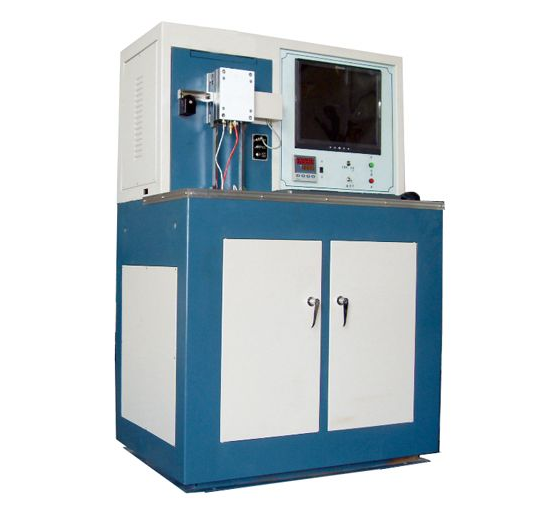
The Metal Ring-Block Friction and Wear Tester opens up a new perspective for materials testing. Traditional material testing methods often provide only a general evaluation of macroscopic properties, making it difficult to accurately characterize the friction and wear behavior of materials at the microscopic level. The development of the Metal Ring-Block Friction and Wear Tester helps address this limitation.
The tester can accurately measure microscopic parameters such as the coefficient of friction, wear amount, and surface morphology of materials under different operating conditions, providing more comprehensive and in-depth data for material performance evaluation.
By analyzing these microscopic parameters, researchers can gain a deeper understanding of the physical changes and chemical reactions that occur during the friction process, thereby revealing the underlying mechanisms of material wear.
For example, when testing a new type of ceramic material, the Metal Ring-Block Friction and Wear Tester can clearly reveal changes in the material's surface morphology caused by friction. This helps researchers determine whether the dominant wear mechanism is abrasive wear, adhesive wear, fatigue wear, or another type of wear, providing valuable guidance for subsequent material improvement and optimization.
In the pursuit of materials innovation, the Metal Ring-Block Friction and Wear Tester plays a role similar to a “catalyst.” It provides researchers with an efficient and reliable experimental platform that can accelerate the development of new materials. With the help of the tester, researchers can rapidly screen materials with potential application value and continuously optimize material formulations and manufacturing processes through repeated friction and wear tests until the desired performance targets are achieved.
Taking high-performance alloy materials as an example, meeting the demanding requirements of advanced fields such as aerospace and nuclear energy requires continuous exploration of new alloy compositions and heat-treatment processes. The Metal Ring-Block Friction and Wear Tester can test a large number of alloy samples with different formulations within a relatively short period and compare their friction and wear performance.
This allows researchers to quickly identify promising material solutions, significantly shorten the R&D cycle of new materials, improve research efficiency, and accelerate advances in materials science.
Throughout various stages of industrial production, the Metal Ring-Block Friction and Wear Tester serves as a “quality guardian” for ensuring product performance and reliability. It enables rigorous friction and wear testing of various materials and components used in production, helping verify that their performance meets design specifications and applicable industry standards.
By conducting sampling inspections of raw materials, manufacturers can identify material quality fluctuations at an early stage and prevent non-conforming materials from entering the production process. During the machining and assembly of components, the tester can also be used to evaluate critical components, helping determine whether their friction and wear performance is affected by manufacturing processes.
In the automotive manufacturing industry, the friction and wear performance of critical components such as engine piston rings and crankshaft bearings is directly related to engine performance and service life. The Metal Ring-Block Friction and Wear Tester can accurately evaluate these components, helping verify that they maintain stable friction and wear characteristics under demanding operating conditions involving high temperatures, high pressures, and high-speed operation.
This not only improves product quality and performance consistency but also contributes significantly to the economic efficiency and overall competitiveness of manufacturing enterprises.
Looking ahead, the Metal Ring-Block Friction and Wear Tester will continue to drive advances in the field of materials testing. With the emergence of cutting-edge technologies such as nanotechnology and smart materials, the tester will continue to expand its testing capabilities and application scope to meet the increasingly demanding requirements of new material evaluation.
For example, the friction and wear characteristics of nanomaterials can differ significantly from those of conventional materials. By incorporating nanoscale measurement technologies and in-situ characterization techniques, the Metal Ring-Block Friction and Wear Tester can enable more precise measurement and in-depth analysis of the friction and wear behavior of nanomaterials.
At the same time, the tester is expected to become increasingly integrated with emerging technologies such as big data and artificial intelligence (AI), enabling intelligent processing and analysis of test data. By mining and learning from large volumes of test data, the system can establish predictive models for material friction and wear performance, providing more scientific and accurate decision-making support for material design, selection, and application.
As global attention to sustainable development continues to grow, the Metal Ring-Block Friction and Wear Tester will also find broader applications in the evaluation of green materials, biodegradable materials, and other environmentally friendly materials, supporting the development of materials science toward greater sustainability.
With its outstanding testing capabilities and broad range of potential applications, the Metal Ring-Block Friction and Wear Tester is opening new possibilities in materials testing. It provides strong technical support for material performance evaluation, innovative R&D, and quality control, contributing to continued advances in materials science and engineering.As technology continues to evolve, the Metal Ring-Block Friction and Wear Tester will play an increasingly important role in advancing friction and wear testing technologies, supporting the development of higher-performance materials and contributing to a more sustainable and technologically advanced future.