Today, as motorcycles and electric bicycles become increasingly popular means of transportation, helmets have become essential safety equipment for protecting riders' lives. Their quality directly affects the risk of injury or death in traffic accidents. Among the various helmet safety indicators, however, the abrasion resistance of the visor (face shield) is often overlooked, despite its critical importance. If the visor becomes severely worn or cloudy due to exposure to windblown sand, dust, or flying stone fragments during riding, the rider's vision may be impaired, creating serious safety hazards. The Falling Sand Abrasion Test Machine for Motorcycle Helmets is a specialized testing instrument developed to simulate these real-world conditions and strictly evaluate the abrasion resistance of helmet visors.
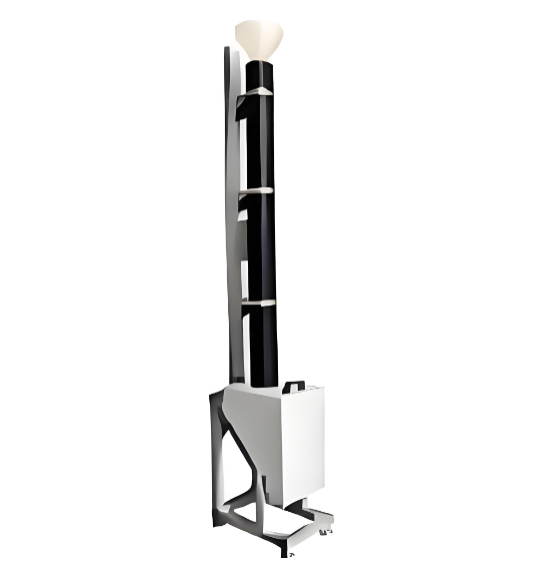
The falling sand abrasion test is based on simulating natural abrasive processes under controlled and repeatable laboratory conditions. Its core mechanism uses gravity or airflow to control the continuous falling of abrasive particles of specified characteristics at a controlled flow rate and drop height, allowing them to impact the surface of a specimen mounted on a rotating turntable.
During testing, the helmet visor specimen is securely mounted at the designated testing position on the machine. Once the control system is activated, the specimen turntable rotates at a low speed, typically 5 rpm, ensuring that the abrasive particles are distributed evenly across different areas of the lens. At the same time, silicon carbide abrasive particles in the sand hopper flow continuously through the abrasive delivery tube and fall onto the specimen. Accelerated by gravity, these particles produce repeated micro-impacts and friction on the lens surface, simulating abrasive wear under actual operating conditions.
After the test is completed, technicians remove the specimen for inspection. First, a visual examination is performed to identify any damage, indentations, or obvious abrasion marks that could affect normal use. More importantly, specialized haze-measurement equipment is used to quantitatively evaluate changes in the optical properties of the lens. By comparing the haze values before and after testing, the abrasion resistance of the lens can be assessed comprehensively. This dual evaluation method, combining physical damage inspection with quantitative optical performance measurement, helps ensure that the test results are comprehensive and reliable.
A qualified Falling Sand Abrasion Test Machine for Motorcycle Helmets features a carefully engineered structure and parameter settings designed to meet the applicable testing standards. Its main components typically include a sand hopper, precision abrasive delivery tube, specimen mounting mechanism with a rotating turntable, abrasive collection system, machine frame, and dustproof safety enclosure.
In terms of technical specifications, commonly used equipment generally features the following characteristics:
Abrasive specifications: Silicon carbide (SiC) abrasive is used, with the particle size typically specified as above 125 μm (approximately 100–140 mesh), as stated in the original specifications, to help ensure consistent abrasion conditions.
Turntable speed control: The specimen turntable operates at a stable speed of approximately 5 rpm to ensure uniform abrasive exposure across the specimen surface.
Test cycle settings: The machine is equipped with a high-precision counter that can be set from 0 to nearly one million impact cycles, accommodating different test durations required by applicable standards.
Compact design: The machine is designed to optimize space utilization and is typically equipped with an independent control unit for convenient operation and parameter monitoring.
In addition, modern falling sand abrasion test machines often incorporate automatic control systems and touchscreen displays. These features enable precise control of parameters such as the abrasive drop height, flow rate, and test duration, reducing errors caused by manual operation while improving testing efficiency and data reliability.
The Falling Sand Abrasion Test Machine for Motorcycle Helmets has a wide range of applications. In addition to motorcycle helmets, it can be used in the testing of electric bicycle helmets, roller-skating helmets, ski goggles, and various industrial protective face shields, provided the test method is appropriate for the product and applicable standard.
For helmet manufacturers, this equipment is an indispensable tool for new product development and factory quality control. During the research and development stage, falling sand abrasion tests help manufacturers identify more abrasion-resistant visor materials and optimize product designs. During production, the machine serves as an important quality assurance tool for verifying that each production batch meets the applicable national standards and for preventing large-scale quality problems.
For third-party testing laboratories and government quality supervision departments, the falling sand abrasion test machine is an important instrument for market surveillance and product conformity assessment. For example, when local market regulation authorities conduct product quality inspections of helmets, visor abrasion resistance may be included among the key testing items. If a product fails to meet the applicable requirements, it may be deemed to present a safety risk and may be prohibited from being placed on the market in accordance with the relevant regulations.
In the materials science and mechanical testing laboratories of universities and research institutes, this equipment can also be used to investigate the abrasion mechanisms of new polymer materials and support the development of advanced protective materials.
As public awareness of traffic safety continues to grow and national standards become increasingly stringent, quality supervision of motorcycle helmets is entering an era of more refined and rigorous control. As a bridge between laboratory test data and real-world safety performance, the Falling Sand Abrasion Test Machine for Motorcycle Helmets plays a significant role in ensuring product quality.It is more than just a testing instrument; it is an essential tool for helping maintain clear rider vision and supporting the protection of life and safety. In the future, with continued advances in intelligent technologies, falling sand abrasion test machines are expected to become increasingly automated and digitalized, providing stronger technical support for the high-quality development of the helmet industry.
Prev:What Can a Dual-Station Motorized Crocking Tester Test?
Next:No more