Among the many factors involved in footwear design and quality assessment, the abrasion resistance of eyelets and shoelaces is undoubtedly an important consideration. As critical components connecting the upper to the shoelaces, eyelets not only play an essential role in securing the laces but also directly affect wearing comfort and the overall durability of footwear. Shoelaces, which are subjected to repeated friction and tension during everyday wear, must also demonstrate excellent abrasion resistance. Therefore, the development and application of Eyelet and Shoelace Abrasion Testers have become important aspects of quality control and technological innovation in the footwear manufacturing industry.The abrasion resistance of eyelets and shoelaces is an important indicator of footwear durability, directly affecting product service life and wearing comfort. The following sections provide an overview from four key perspectives: testing standards, material characteristics, testing methods, and practical applications.
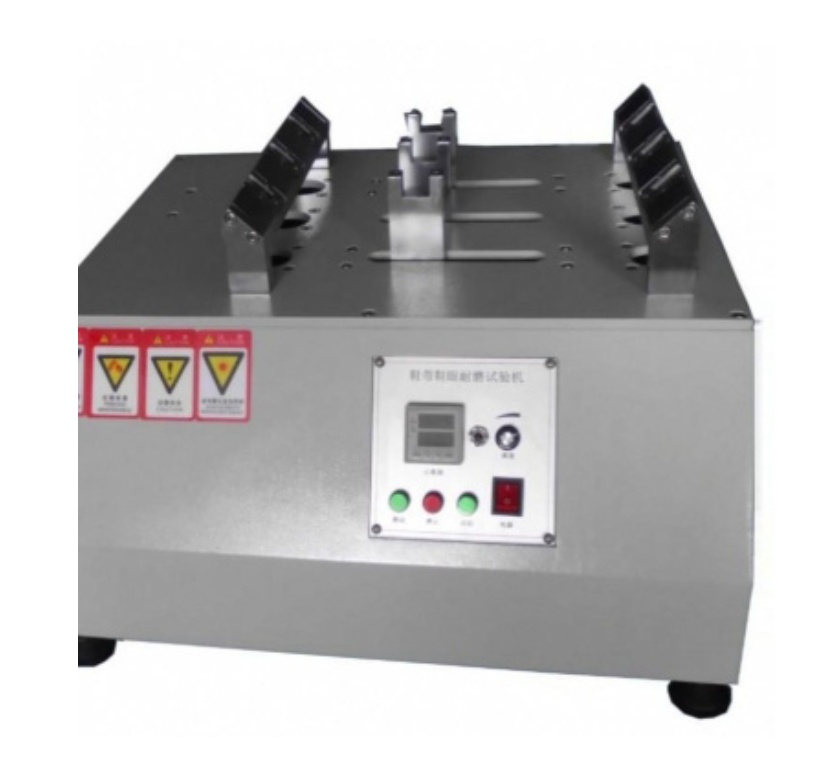
The key testing parameters include:
Testing Conditions: Room temperature of 23 ± 2°C. The specimen length should be at least 200 mm. If the specimen is shorter than the required length, it can be extended by splicing.
Testing Methods:
Shoelace-to-Eyelet Friction Test: Thread the shoelace through a standard eyelet, secure one end, and attach a specified weight to the other end. The shoelace is repeatedly pulled back and forth through the eyelet to simulate friction during actual use.
Shoelace-to-Shoelace Friction Test: Two shoelaces are brought into direct contact and rubbed repeatedly against each other to evaluate their mutual abrasion resistance.
Shoelace-to-Cut-Out Eyelet Friction Test: An eyelet is cut from a finished shoe, secured in the testing fixture, and rubbed repeatedly against the shoelace to evaluate abrasion resistance under simulated service conditions.
Evaluation Criteria: A specimen is considered to have failed if the shoelace breaks, yarns become severed, severe abrasion occurs, or the damage significantly affects its appearance and usability.
International and industry standards such as SATRA TM93. DIN 4843. and QB/T 2226 are commonly referenced in footwear-related abrasion testing. Testing equipment typically supports six specimens tested simultaneously, with independent testing stations to prevent mutual interference. The number of test cycles can reach 0–99.999.999. with preset cycle counts and power-failure memory functions.
1.Shoelace Materials
Polyester: Offers good abrasion resistance and durability, making it suitable for everyday footwear and general-purpose applications.
Nylon: Soft and smooth, with excellent abrasion resistance and tensile strength. It is widely used in sports footwear.
Elastic Rubber-Core Shoelaces: Commonly used in no-tie shoelace designs. They provide flexibility to accommodate slight changes in foot shape and are suitable for older adults, children, and users who prefer convenient footwear. However, the elastic core should be protected by an abrasion-resistant outer fabric.
2.Eyelet Materials
Metal Eyelets: Provide excellent wear resistance and structural durability. However, their edges may damage or scratch the surrounding upper material if the design and reinforcement are inadequate.
Plastic Eyelets: Lightweight and less likely to scratch or damage the upper. However, their abrasion resistance may be lower than that of metal eyelets, depending on the material.
Fabric Loop Eyelets: Commonly found in sports footwear. Their durability depends heavily on the fabric strength and reinforcement structure. Prolonged friction and repeated tension may cause the loops to fray or tear.
1.Specimen Preparation
Prepare six specimens, each measuring 300 ± 10 mm in length.
The eyelets can either be cut directly from finished footwear or mounted on a fiberboard support before being attached to a metal strip, depending on the test method and specimen requirements.
2.Testing Procedure
Eyelet Installation: Secure the eyelet at the end of a metal strip to simulate the eyelet position and mounting structure of finished footwear.
Shoelace Installation: Thread the shoelace through the eyelet and clamp it into the movable fixture. The distance between the fixture and the eyelet should be approximately (D − 90) mm, according to the specified test configuration.
Parameter Setting: Set the required number of test cycles, for example, 10.000 cycles.
Start Testing: Start the tester. The movable fixture repeatedly pulls the shoelace back and forth through the eyelet, simulating friction during actual use.
Result Evaluation: After testing, record the number of cycles until breakage, the type of damage, the degree of shoelace abrasion, and any visible damage to the eyelet.
1.Selection Based on Footwear Type
High-Top Basketball Shoes: Require strong and secure lacing performance. Durable nylon or polyester shoelaces combined with reinforced metal eyelets are recommended.
Loafers and Casual Shoes: Elastic shoelaces, such as rubber-core elastic laces, can improve convenience and make shoes easier to put on and take off.
Sports Shoes: Flat shoelaces are generally preferred for improved stability and reduced loosening during physical activity. Round shoelaces offer good flexibility and resistance to pulling forces.
2.Color Selection and Maintenance
Black and White Shoelaces: These are versatile colors that match a wide range of footwear designs. White shoelaces provide a clean, fresh appearance but are more susceptible to visible dirt, while black shoelaces are generally easier to maintain.
Cleaning Recommendations: Nylon shoelaces are relatively easy to clean. Polyester shoelaces should also be handled carefully to avoid excessive pulling or mechanical damage during cleaning and maintenance.
3.Brand and Product Quality
There is no universally best shoelace brand. The key factors are material quality, manufacturing processes, structural design, and abrasion resistance.
For example, elastic shoelaces featuring a high-rebound rubber core and an abrasion-resistant woven outer layer are particularly suitable for applications involving frequent putting on and taking off of footwear.
With continuous technological advancement and increasingly stringent consumer expectations for product quality, Eyelet and Shoelace Abrasion Testers are expected to become more intelligent, accurate, and efficient. Future developments may focus on the following areas:
Intelligent Upgrades: Integration of the Internet of Things (IoT), big data, and artificial intelligence (AI) will enable intelligent test control, automated data analysis, and improved testing efficiency and accuracy.
More Precise Testing: More sophisticated parameter control and advanced testing technologies will allow manufacturers to evaluate the abrasion resistance of eyelets and shoelaces with greater precision and consistency.
Environmentally Friendly Design: Greater attention will be paid to energy efficiency, emission reduction, and waste management during testing, supporting the sustainable development of the footwear manufacturing industry.
Multifunctional Integration: Abrasion testing may be integrated with other performance evaluations, such as tensile strength and aging resistance testing, to create comprehensive footwear quality inspection platforms.
In conclusion, the Eyelet and Shoelace Abrasion Tester is an important instrument for footwear quality control. Its development and application play a significant role in improving product durability, ensuring consistent quality, and meeting consumer expectations. With ongoing technological innovation and expanding application requirements, footwear products are expected to become increasingly durable, comfortable, and environmentally friendly.
Prev:What is the purpose of a total knee prosthesis wear testing machine?
Next:No more