As the automotive industry continues to pursue an exceptional driving experience, quietness has become one of the key indicators of vehicle luxury and overall quality. However, many vehicle owners encounter annoying squeaking noises when driving on uneven roads or opening and closing doors. These noises often originate from interior trim panels, seats, dashboards, and other components.Unlike engine noise or wind noise, these irritating sounds are often caused by microscopic movements between contacting material surfaces, a phenomenon known as stick-slip.To identify and eliminate such noise at its source, the Material Friction Stick-Slip Noise Tester has become an indispensable precision testing instrument in automotive research and development.
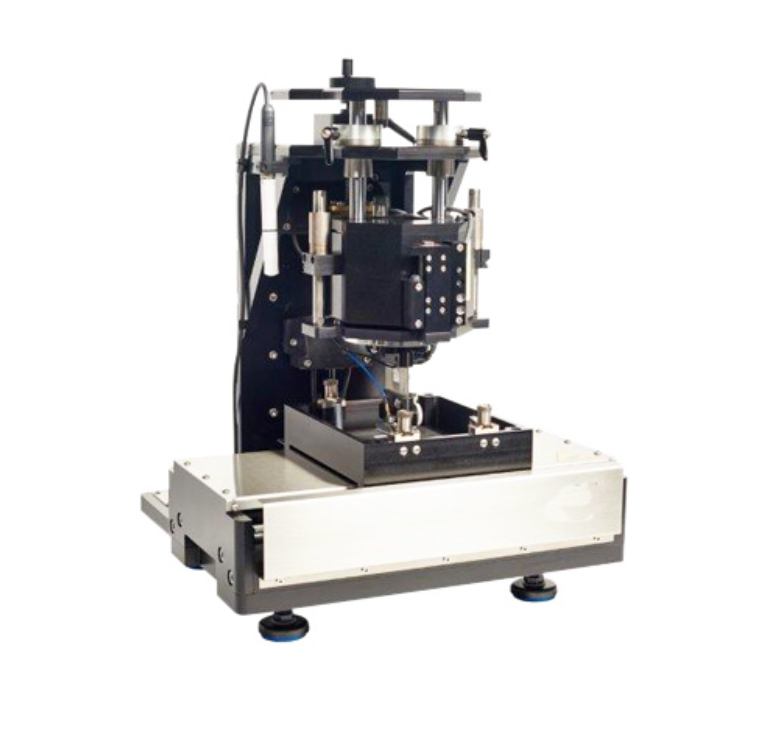
To understand the value of this testing equipment, it is essential to examine the mechanism behind squeaking noises.
When two surfaces made of different materials come into contact and move relative to each other, friction is affected by surface roughness, intermolecular forces, and environmental temperature and humidity. As a result, friction does not remain constant.
The movement typically follows a repeating cycle of "sticking, adhesion, sudden sliding, and sticking again." This phenomenon is known as Stick-Slip.
Each sudden transition from sticking to sliding releases a small amount of energy, generating microscopic vibrations and sound waves. When these vibration frequencies fall within the range of human hearing sensitivity, they can produce audible squeaking noises.
Conventional friction coefficient testers can only measure average friction forces and cannot effectively capture these transient fluctuations. In contrast, the Material Friction Stick-Slip Noise Tester is specifically designed to detect and analyze these dynamic friction behaviors.
The Material Friction Stick-Slip Noise Tester uses a linear motor to drive a test head across the material surface. Under a specified normal load, the instrument records changes in friction force as a function of displacement.
It collects real-time data and calculates the following key parameters:
Static Friction Force: The initial friction force required to initiate relative movement between two contacting surfaces.
Dynamic Friction Force: The average friction force during continuous sliding.
Maximum Friction Acceleration: The peak acceleration generated during the transition between sticking and sliding.
Pulse Frequency: The number of stick-slip pulses generated per millimeter of material surface.
Coefficient of Friction (COF): The ratio of friction force to normal force.
Risk Priority Number (RPN): An evaluation of potential squeaking noise risks based on friction fluctuations and pulse frequency.
These parameters help engineers analyze material incompatibility, optimize automotive interior material combinations, and predict friction-induced noise during actual vehicle operation.
Its Key Technical Features Include:
High-Precision Linear Drive System
The equipment typically adopts a linear motor or precision servo drive mechanism to achieve smooth movement at extremely low speeds.Its highly stable speed control minimizes vibrations generated by the equipment itself, preventing external interference from affecting test results and ensuring reliable measurement accuracy.
Synchronized Multi-Sensor Data Acquisition
Unlike conventional friction testers, this instrument integrates high-sensitivity acceleration sensors, microphones, and force sensors.In addition to measuring static and dynamic friction forces, it can capture key parameters in real time, including maximum friction acceleration, stick-slip pulse frequency, and perceived sound loudness.These measurements provide essential data for evaluating the potential risk of squeaking noises in automotive interior materials.
Comprehensive Environmental Simulation Capability
Squeaking noises are highly sensitive to temperature and humidity variations.Advanced testing systems can be equipped with an environmental chamber, allowing tests to be conducted across a wide temperature range from -30°C to 80°C under different humidity conditions.This capability enables engineers to evaluate the acoustic performance of material combinations under extreme cold, high-temperature, and humid environments, ensuring consistent noise-control performance under different operating conditions.
One of the most important evaluation results in a test report is the RPN (Risk Priority Number).
Calculation Principle:
RPN is a risk assessment indicator that considers the frequency of noise occurrence, the severity of its impact, and the detectability of potential defects.
Evaluation Criteria:
According to the evaluation scale described here:
RPN 1–3: Low Risk – Good material compatibility with a relatively low likelihood of squeaking noise.
RPN 4–5: Medium Risk – Potential friction-induced noise that may require further evaluation.
RPN 6–10: High Risk – A high likelihood of irritating squeaking noises during actual use.
By quantifying RPN values, engineers can identify incompatible material combinations during the early design stage, reducing the need for costly modifications later in product development.
As consumer expectations for automotive quality continue to rise, NVH (Noise, Vibration, and Harshness) performance has become an increasingly important competitive factor for automotive manufacturers.The Material Friction Stick-Slip Noise Tester is more than just a testing instrument; it serves as a bridge between material science and real-world acoustic comfort.By converting subjective auditory experiences into measurable physical data, the instrument helps engineers identify potential noise issues during the early stages of product development and optimize material combinations to create quieter and more comfortable vehicle interiors.Looking ahead, with the integration of intelligent algorithms and advanced data analysis technologies, this type of testing equipment is expected to enable more automated and intelligent squeak noise prediction, further advancing automotive quality and driving comfort.