In the fields of mechanical engineering, petrochemical engineering, and new materials research and development, friction and wear are key factors affecting equipment service life and safety. As a classic tribological testing instrument, the Timken Extreme Pressure Friction Tester has become an important tool for evaluating the extreme pressure performance of lubricating oils and the scuffing resistance of materials, thanks to its unique ring-and-block contact structure and standardized testing methods.
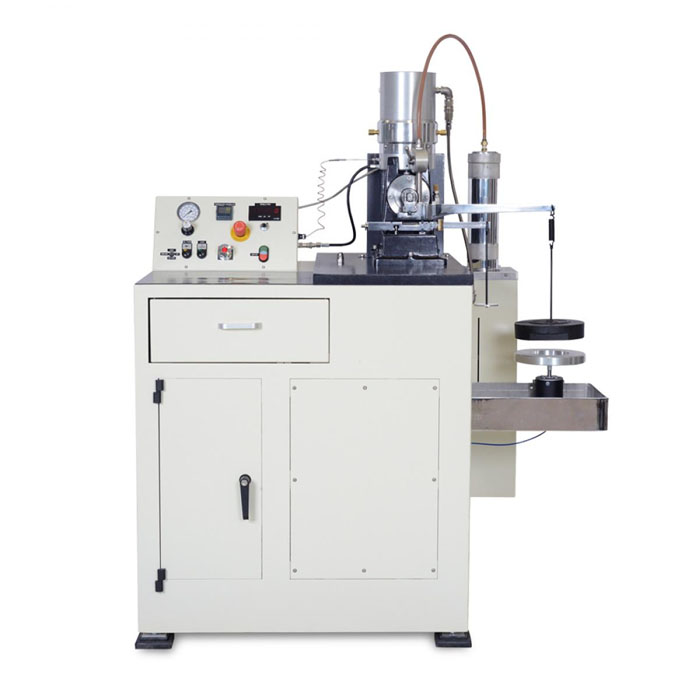
The design of the Timken Test Machine is inspired by common line-contact friction conditions found in industrial applications, such as the relative sliding between tooth surfaces during gear meshing or the contact between rolling elements and raceways in rolling bearings. Its core structure consists of a rotating standard steel test ring and a fixed rectangular test block. During testing, the test ring is driven by a motor to rotate at a preset speed, while the test block is pressed firmly against the outer surface of the test ring through a loading system that applies a controllable load. This creates a typical line-contact friction pair between the two components, with the contact area exhibiting a narrow, elongated rectangular distribution.
This structural design effectively simulates actual operating conditions under high loads and boundary lubrication. Boundary lubrication refers to a condition in which only an extremely thin lubricating film exists between the friction surfaces, with some surface asperities potentially coming into direct contact. This places stringent demands on the load-carrying capacity of both the lubricant and the materials. By precisely controlling the rotational speed, temperature, and applied load, the testing machine can reproduce frictional behavior under extreme pressure conditions in a laboratory environment, bringing the test conditions closely in line with actual operating conditions.
The equipment is typically equipped with a high-precision friction torque sensor and an automatic loading mechanism. The former is used to record subtle changes in torque during the friction process in real time, while the latter ensures smooth and accurate load application. Together, these components help ensure the stability of the testing process and the repeatability of the test data.
When using the Timken Test Machine for evaluation, two core indicators are particularly important: the OK value and wear scar width. These indicators characterize the service performance of the friction pair from two different perspectives: load-carrying limit and degree of wear.
The OK value, also known as the maximum non-seizure load, refers to the maximum load that a lubricant or material can withstand during testing without causing surface scratching, seizure, or welding. Once seizure occurs, it indicates that the lubricating film has lost its load-carrying capacity, resulting in direct metal-to-metal contact and adhesive damage between the friction surfaces. This value directly reflects the extreme pressure load-carrying capacity of a lubricant or the anti-seizure performance of a material. A higher value indicates a stronger ability to maintain effective lubrication and surface integrity under high loads.
When determining the OK value, a step-loading procedure is typically used. The test begins at a relatively low load, which is gradually increased in stages. After the friction pair operates for a specified period at each load level, the surface condition is inspected until visible damage is observed. The highest load level at which no damage occurs before the onset of damage is recorded as the OK value.
Wear scar width is another important parameter. After the test block operates under a specified load for a defined period, the width of the wear scar on its surface is measured using an optical microscope or profilometer. The regularity of the wear scar morphology and changes in its width can provide insight into the evolution of wear mechanisms during the friction process. A narrower wear scar generally indicates better anti-wear performance of the lubricant or greater wear resistance of the material.
When used together, these two indicators enable a comprehensive evaluation of the friction pair's performance under extreme operating conditions from two perspectives: “whether failure occurs” and “the extent of failure.”
The Timken Extreme Pressure Friction Tester has a wide range of applications, covering multidimensional testing from liquid lubricants to solid materials. It provides standardized evaluation methods for product research and development and quality control across various industries.
In the lubricant industry, it is a standard instrument for evaluating the extreme pressure performance of gear oils, lubricating greases, hydraulic oils, and metalworking fluids. Lubricating products often need to withstand significant load fluctuations and impact loads in practical applications, and their extreme pressure performance directly affects the operational reliability of equipment. In particular, during the development and quality inspection of heavy-duty industrial gear oils and automotive gear oils, the OK value serves as an important reference for evaluating product quality. By comparing the effects of additives in different formulations, engineers can systematically evaluate the performance of functional components such as extreme pressure additives and anti-wear additives. This helps optimize lubricant formulations and improve their protective capabilities under high-pressure conditions.
In the field of materials science, the equipment is used to evaluate the wear resistance of metal materials, surface coatings, and composite materials. Different materials may exhibit significant differences in their load-carrying limits and failure modes under sliding friction conditions. Whether it involves bearing steel, alloy steel, surface-hardened layers treated through carburizing or nitriding, or physical vapor deposition (PVD) coatings, the Timken Test Machine can be used to investigate their load-carrying limits and failure mechanisms under sliding friction. This provides reliable data support for material selection and process improvement in mechanical components, enabling designers to appropriately match material properties with service conditions based on test results and extend component service life.
In conclusion, the Timken Test Machine demonstrates significant application value in the evaluation of lubricant extreme pressure performance and the study of material wear resistance. This is made possible by its unique line-contact friction pair design, precisely controlled testing conditions, and quantitative evaluation capabilities for key indicators such as the OK value and wear scar width.Whether used for formulation screening and material selection during product development or for batch inspection and performance comparison in quality control, the equipment can provide stable, reliable, and highly repeatable test data. Contact us directly to learn more about the Timken Test Machine and its applications.